Tuesday, December 31, 2024

Year in Review


Yikes, the year is over! Where did it go? I was hoping that after being injured for a year in most of 2022 and out of work for 2023 that this year would be more "normal". I had hoped to go back to what most would consider just that. Go to work and when I had time, play. Most importantly, stay healthy. While I managed to stay healthy this year, Laurie had issues leading to a broken ankle and was bed ridden for weeks, then rehabbing for months. This effectively gave her no summer and I spent much of it visiting her or taking care of her during that time. Despite this, 2024 was the most even keeled year for me since pre-COVID

  While some years I spend much of my time fishing or birding and other years hiking, this year I spent as much time as I could trying to see how many species I could see in New England. I called it Operation 365. The hope was to see 365 species of vertebrates in a year. When I wasn't at a hospital, I was birding, fishing, seining, and herping all to see if I could reach 365.

   I kept track of my Rhode Island birds on Paul L's website. My other New New England birds were kept in a notebook. I also kept a separate list for fish, herps, and mammals. Basically this post will be dominated by one theme...numbers. I haven't kept a bird list since 2021 because I get too competitive but I did this year. Other than for the purpose of doing "A Big Year" I don't love doing it. I'd rather keep track of experiences than numbers. But I made an exception this year. 

By the numbers...

   428 species  

      301 species of birds, 28 mammals, 28 herps (amphibians and reptiles), 72 species of fish

          267 birds in RI + 34 others from MA, CT, NH, ME

     72 species of fish    19 caught with a fishing rod, the others seining, in the water, or other fishermen

      28 herps      14 reptiles, 14 amphibians

      28 mammals    nine that live in the ocean

Lifers...

    One goal was to force myself to see multiple lifers. I chased a lot of things.  I got 34 lifers. Fifteen were birds, one amphibian (Four Toed Salamander), fifteen fish, and three mammals ( Hoary Bat and Red Backed Vole, Southern Flying Squirrel). 

   Included, I got eleven new species of birds in Rhode Island bringing my Rhode Island life total up to 346

Bird lifers- MacGilvray's Warbler, Northern Shrike, Little Gull, Hermit's Warbler, Swainson's Warbler, White Winged Dove, Mottled Duck, American Flamingo, South Polar Skua, Lark Bunting, Grey Cheeked Thrush, Black Throated Grey Warbler, Northern Lapwing, Tropical Kingbird, Swallow Tailed Kite

   All but the Swainson's, Hermit Warbler, and Lark Bunting, Swallow Tailed Kite were seen in RI. I also got one other state bird, Golden Eagle

   Fish lifers were the following- Pompano, Red Hake, Whiting, Snowy Grouper, Spotfin Butterflyfish, Bigeye Shorttail, Naked Goby, Oyster Toadfish, Rainwater Killifish, Four Spined Stickleback, Sheepshead Minnow,  Smallmouth Flounder,, SEAHORSE, Four-eyed Butterflyfish 

Eastern Creek Chubsucker  was my only freshwater lifer

Dips-

With a quest like this you are going to have a lot of misses. Believe me, there were many drives with my tail between my legs. A quick recap of some of my worst ones

   By far, I did the worst with mammals in terms of not seeing species I had previously seen. I missed Black Bear, Moose, River Otter, Striped Skunk and all mice (and rat) except White Footed Mouse. I tried really hard to catch rodents setting live traps. I caught plenty of White Footed Mice but nothing else until I caught a squirrel that destroyed my trap.

   For snakes I only saw six of the thirteen possible species. I knew I hasn't going to see Copperheads because I didn't go to look for them. My most surprising snake miss was Ribbon Snake which is pretty common. My friend Nicole and I came across a dead Rat Snake but I didn't count dead animals.

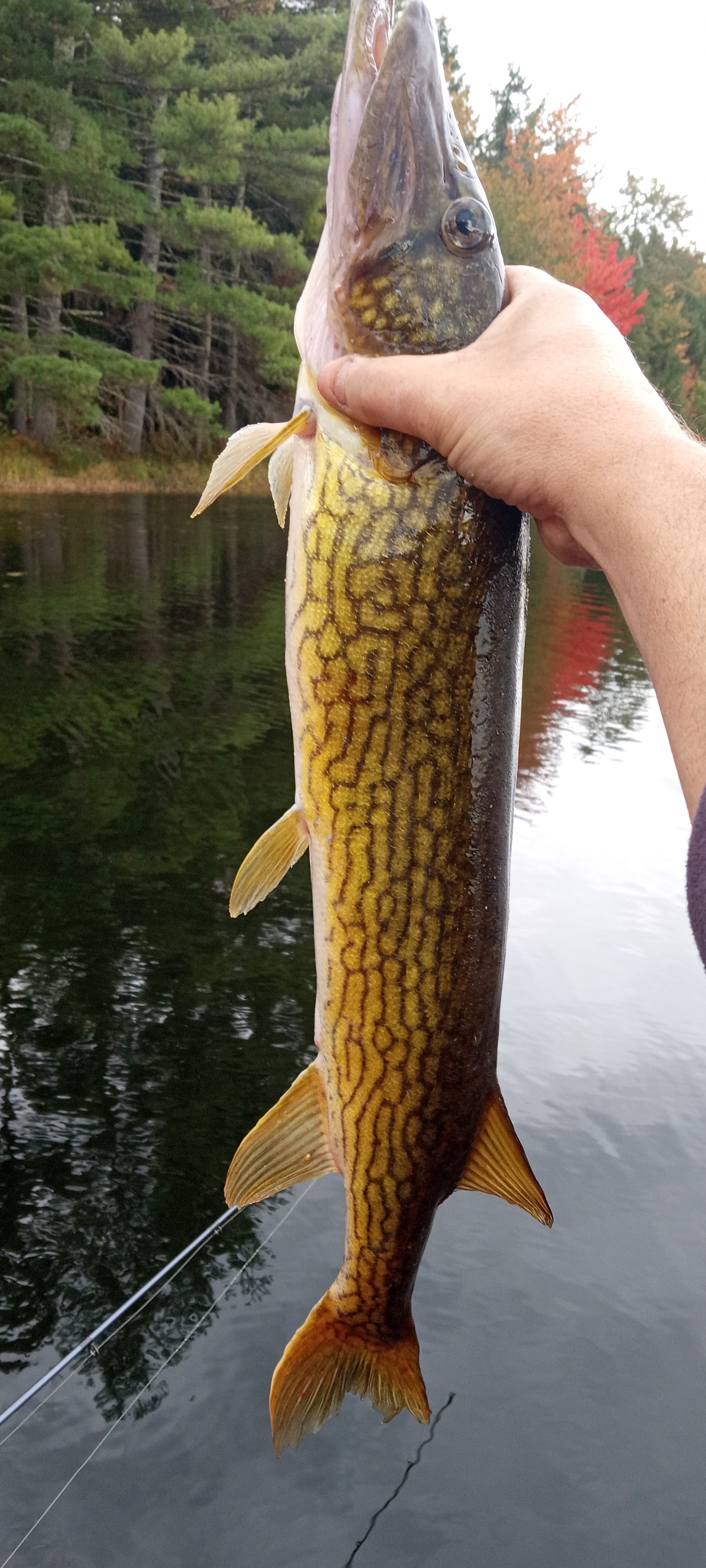
  I missed a lot of fish. I saw a Northern Pike, actually two, but I really wanted to catch one. I made three trips to Connecticut to fish for them each a three hour round trip. I also tried for them on the upper Connecticut River in New Hampshire twice. Though I saw one, Pike took up more time for me than any other species. I also dipped on Yellow Bullhead three times but each trip was less than an hour. My second most annoying miss was Spiny Dogfish which I tried for multiple times without luck. I also missed Albies and American Shad. 

   I got really lucky with birds. I saw almost everything I chased. I decided if it wasn't a "state bird" in RI and I had previously seen it, if I saw one in another state I wasn't going to chase it in RI. This meant after I saw Nelson's Sparrow, Greater White Fronted Goose, Short Eared Owl and thirty one other species, I wasn't going to look for them in RI. Worse than dipping was my seasickness. I missed five species on pelagics due to being upsot. I would have 306 species, and far less stress the end of December if I could have just stayed vertical and not been heaving.

Favorite Memories- 


Eastern Creek Chubsucker

   Obviously, I didn't want this year to be all about numbers. However, I really did want to see many lifers and make memories. Starting two sentences off in a row with obviously wouldn't be great writing, but... obviously seeing a Flamingo in RI was amazing. But so was seeing a Golden Eagle with six of my friends. Other fun birding memories were seeing a "heard only" Swainson's Warbler and getting the other four guys on it. Chasing and getting killer photos of a Black Bellied Whistling Duck with Laurie who was barely walking. There are tons of good times. I saw three lifers with Claudia Cooper and got at least two RI lifers thanks to my friend Sue Palmer.

    For herps my favorite memory was finding a Milk Snake again that I saw last year and then another much smaller one a month later. I did get chiggers though.

   For mammals I saw a coyote and almost all marine mammals from a bird club whale watch that I co-lead in April. That was fun. Also seeing a Red Backed Vole and explaining what I saw to Dan Berard and having him know exactly what I saw was cool.

   Lastly, I spent a lot of time seining. Since I had Tautog, Black Sea Bass, Scup, and Sea Robin in the seine, it saved me from having to catch them on a rod.  I think I got most excited about the Pompano, Jack Crevalle, and Eastern Creek Chubsucker. 

  Lastly for this category, it is way more fun to be a "finder" than a follower. With birds, I did not have a good year finding many of the good birds. With my friend Nicole we had Alder Flycatcher. In NH I found unreported Purple Finch, Yellow Bellied Flycatcher, Black Backed Woodpecker and Mourning Warbler. But for the most part, the rest of the good birds I saw were because of chasing reports. There is no way I would have come close to 300 birds without the unselfishness of birders.

   As for the other 128 species that were not birds I am proud to say almost all were because I found them. I had to look hard for most snakes (easily fifteen  trips looking for Green Snake). I set a minnow trap almost everyday for a month until I caught a Banded Sunfish in a creek that I thought they were in. The Chubsucker was luck since I went searching for little creeks to seine.

Many thanks...

   As I said, without unselfish birders I'm much closer to 280 than 301 birds. I enjoy hanging around dozens of birders in RI and many are really close friends. I appreciate them more than they know. There is no point naming all of them here, but a big thank you for being my friend

 There are so many people that help[ed me on this one year quest. Allison O'Conner seined with me more than anyone. I can't seine the ocean alone so without her, and her tireless pushing, I wouldn't have seen so many fish.  Laurie, Sue Palmer, Dick and Marge Bradley, Louise Ruggeri, Jan StJean, PCarl, and probably others that I can't remember at the moment all helped seine at least once.

   My buddy Dave was with me when I caught Carp and saw my excitement when I caught a White Catfish.

  For sure, the person that I talked with the most, strategized with, and told about my success and failures was Charles Avenengo. We message multiple times a week. Without his seine and teaching me how to use it, I would have less fish. He also identified many of the oddball species I caught when I sent him photos. 

   Many of you kept asking me my number supporting my effort. Barbara Seith for one, asked me many times where I was at. It was nice to know people cared. 

   Lastly, Laurie likes nature but isn't going to get excited about a  Short Billed Dowitcher, but she knew how badly I wanted three hundred New England birds. I was at 296 around December 15. So everyday that I had off from work in late December she came along as I chased whatever species had been around. She put up with a thirty mph wind with flurries coming in sideways in Provincetown. She came with me to the New Hampshire coast to see (shake your head) American Pipit for my 300th bird. Not to mention other trips to the Cape, southern RI and the White Mountains. 

   Thanks to all of you. 

Pompano


Humpback Whale


Buff Breasted Sandpiper


Black Throated Grey Warbler


Red Fox


Wednesday, December 11, 2024

Retiring from pelagics

Snowy Owl on the beach

 Since I got obsessed with birding and started making friends with birders in 2018 I've gone on quite a few pelagic birding trips. I remember the first one vividly seeing my first Shearwaters and Jaegers. We had a Mola Mola, Bottlenose Dolphins and even saw the fin of a Blue Shark.

  Since then I've seen almost everything out there that isn't crazy rare. My adventures have made memories of great birds, breaching whales, and a school of Pilot Whales that will last forever.

   The problem is, I get seasick on at least half of the boat trips I go on. I've tried every over the counter and prescription that I know of and more often than not, if it is slightly rough I add to the chum slick. Not only that, I stay nauseous the rest of the trip and have to lie down in the fetal position. Looking at the horizon does not work for me. Lying down in the cabin dozing in and out of sleep is the only way to keep me from getting sick over and over.

   I got so sick on a twelve hour pelagic in North Carolina that I opted out the second day wasting one hundred and seventy dollars.  The trip had been paid for months earlier but I could not bring myself to go out two days in a row.

  So I think I have made a decision to give up on pelagics. As I said, I really can't see much else as a lifer unless some crazy rare Bird comes up from South America or a Sperm Whale graces the boat with an appearance. 

  The irony is I love pelagics. While I may not seeing anything new for my life, every trip is different and you never know what you will see. I went on an eighth hour charter yesterday with most of my birding friends and spent about half the trip lying fetal along with two trips to the rail to mostly dry heave.  On the trip I saw two new species for the year before I got sick. But I missed another species. When we slowed down to watch dolphins I could barely lift my head up and did not get up to look at them.


Northern Gannet flying across the boat

   It is tough to justify going out for eight hours and spending one hundred ten when you feel so much like death that you won't look at Dolphins. So I decided that the only pelagics I'll ever consider will be in the Pacific. I've never seen the Pacific and if I went on a pelagic in say Monterey Bay, I'd get a dozen lifers and probably Grey Whales and other mammals. So a trip would be worth it. 

 Ironically I've never gotten sick on a whale watch.

 Many times I've just lucked out and it was flat. The whale watch I went on in April was glass calm. I could have kayaked from Plymouth to P-town across Cape Cod Bay. Other rougher trips for reasons unknown to me, I haven't gotten sick. My only hypothesis is that my stomach can handle the shorter four hour trips of a whale watch. Also I usually book whale watches for the afternoon so maybe waking up later has something to do with it. Though, I did get a great night sleep despite having to be on the road at 5:30 am yesterday. 

   Laurie thinks I should give up pelagics because of the cost and my habit of adding chum overboard. But she thinks I should go on whale watches because I haven't gotten sick. I suspect part of her thinking is because she likes whale watches as much as I do.

  Maybe next year I'll go on a whale watch and continue to go if my stomach allows. But as for dedicated pelagics and cod boat trips that last eight hours  anywhere in the Atlantic, I think I am done. 

Sunday, December 1, 2024

Things that I am thankful for


I was happy to finally get a photo of a
Mourning Warbler

   Every year I write a post on Thanksgiving about all of the things I am thankful for. This year I was in New Hampshire and did not have time to write a post. The last couple of years had been hard and I was thankful for relationships, not drowning, and grateful for knowing people that had died. Before the last couple of Thanksgiving posts, I used to write about a few good memories from the year. I am always grateful for New Hampshire, Laurie, Dave, and Striped Bass.

   Having dividing my time between taking care of a bed bound Laurie and trying to see how many species of vertebrates  I can see in a year this year I am just grateful for nature. Without fish, the mountains, the ocean, snakes, and frogs I would be lost.

   I can not put into words how beautiful I think the natural world is. I love to fish, flip rocks, hike, snorkel, chase birds, and find any other excuse to be outside. There are many people that have mental health problems. I am lucky, other than every day stress that we all have to deal with, I do not have any mental health problems. I believe that would not be true if I didn't have the outside world. Being outdoors is my relaxation, but it also my adrenaline rush. It is my reason for planning sunrise to sunset adventures on my days off from work. 

  I could name every thing I enjoy about nature from seeing a rare bird, sitting on top of a mountain, to casting my fly or surf rod. But that list would be endless. While I may get overwhelmed in May, and wish the seasons wouldn't end in November, I understand these are First World problems and I am extremely lucky. 

It seems as though I have not had "a normal year" in the last few. With my back sidelining me a few years ago (awful) and then being healthy and not working (amazing) I had a strange couple of years. I thought things were back to normal when I got my job at Bass Pro in February. I had less free time but also had an income again. Then Laurie got hurt, broke her ankle, and had other medical issues. So many of my plans were derailed over the summer. So this year had more downs than anticipated. Still, I am grateful that when I had time... I had nature to go to. Chasing down many vertebrates was/has been a challenge that has kept me busy all year.

   Below is a list of a few of the things I m grateful for this year. While the writing above is more like my Thanksgiving posts from the last couple of years, I'd like to think about a few individual things that changed 2024 for the better for me...

    I am thankful for my job at Bass Pro Shops. Working in the fishing department is a place I thrive. I'm getting pretty good at my job and enjoy the people I work with. Management treats us well. For example, the last two days they bought us pizza. 

   I am thankful for the use of the seine. I have seen a lot of really neat fish I never knew were in both the ocean and freshwater. It takes two people to use it, so thanks to all of those that helped me.

   I am still thankful for stripers, New Hampshire, and Laurie.

   I am thankful for my birder friends.

   I love smallmouth bass

   I m thankful I got to fish with Dave a few times this year. Birding has really made it tough to go carp fishing. Glad I caught a few carp also.

   I am thankful for all of the lifers I saw this year. I got at least one lifer mammal, bird, fish, and herp. Each one was an adrenaline rush.

   I am thankful I sucked it up and bought an electric motor for my canoe. Just using the motor means more fish because I am not spending as much time paddling. Game changer!

   Call it consumerism if you want, but I am extremely thankful for my employee discount at work. I get a huge discount on Bass Pro brand gear and a very good discount on gear made by other companies. I have really improved my rods and reels along with a couple pairs of hiking boots.

   Lastly, as I said, I am just grateful I love nature. My mom had me outside as a little kid. She took me fishing and on nature walks. But I think it might not have been "nurture" in the nature vs nurture question. I think I would have wanted to explore and see all the fish and snakes anyway. For that, I am truly thankful. 


Wednesday, November 6, 2024

Red and Gold


Over the past week I saw two species that have magnificent colors.  On my weekday off I took a two and a half hour drive to northwest Connecticut and caught Kokanees. Kokanees are a landlocked Sockeye or Red Salmon. They live in a handful of lakes in Connecticut. They can't naturally reproduce in the state so biologists collect spawning adults for eggs/sperm. They fertilize the eggs and release the babies back into the lake. 

   Just like the salmon you see on nature documentaries they die when they spawn. I saw many swimming fish where they were basically rotting away Sockeyes are plankton eaters but stop eating when they get ready to spawn anyway. They are very difficult to catch. Since they are not feeding the only way to get them to bite is to hope one gets angry and wants to kill your lure.

    I spent hours trying to get them to bite. I had dozens right in front of me but only had one offer at my little tiny Kastmaster Spoon. When I caught it I took a photo of it and released it despite its days being numbered. I accidentally snagged a couple others but I do not count those as being caught. I also tried multiple flies with my fly rod but didn't get any takers.


Golden Eagle

  On Saturday I met my birding friends and birded Burlingame Campground. Towards the end of our time there, Tim Metcalf and Carlos Pedro spotted a Golden Eagle soaring about. Most Golden Eagles live out west but some live in Ontario. These birds will travel south for the winter and every now and then one is seen in Rhode Island. We got great looks at it in perfect light. It was soaring pretty far away but in the binoculars we could see the perfect golden head and all of the other features that make it different from a Bald Eagle. This was a state bird for me and was so happy to see it my heart was racing.

   I didn't have my camera but Tim let me use his camera for a few seconds and UI snapped off a couple photos of it. I'm very greatful he let me. 

Saturday, October 26, 2024

Black Bellied Redemption


  Laurie and I took a trip to Forsythe NWR in New Jersey in August 2021. While we were there I was told about a small flock of  Black Bellied Whistling Ducks. They had been there for weeks. Someone told me right where to look. Unfortunately, the day we were there they were not seen. Nobody had them on ebird reports. They were seen again the following day and for the next few days. I'm not complaining on that day I saw a lifer  Roseate Spoonbill, Gull Billed Terns and Caspian Terns. 

   Black Bellied Whistling Ducks are a Florida specialty. Some are also in extreme southern Texas and Arizona. The one in New Jersey was a big deal for the birders there. They are common in Mexico and South America but in the US, they don't live north of central Florida. 

  The day after I came home I went to work as usual. That day Dave Campbell found a Black Bellied Whistling Duck (BBWD for now on) in Warwick, RI. All day at work it was not lost on me the odds that a species that I had never heard of being in Rhode Island showed up the day after I looked for them in New Jersey.

   As soon as I got home from work I dragged Laurie to Apponaug Cove to see the BBWD. I've missed enough birds by mere seconds that we rushed down to see it as soon as I could leave work. When I got to the cove the BBWD followed a bunch of Mallards that came right up to us. It was pretty obvious the Mallards were fed by locals and hoping for a handout. The BBWD stayed back but still got to within fifteen feet of us. Unfortunately my camera was home! I had taken it out of the car to upload the photos from our Philly/ Forsythe trip. I didn't even think about it until I got out of the car and went to grab it. 

   As you might imagine, I was really annoyed that I left my camera at home. I could have gotten amazing photos without even trying because it was so close. Instead, I took a couple of "proof" photos with my underwhelming camera on my phone. It killed me to see everyone else with wallhangers of such a beautiful duck. We were the last people to see the duck (along with one other birder.) After it swam away from us, it kept swimming far down the cove never to be seen again. 

   Fast forward to this week...I was trying to figure out something to do this weekend. I checked the Mass Rare Bird Alerts and saw there was a BBWD in Holyoke. I also wanted to see if I could see spawning Landlocked Salmon from Quabbin and thought we could make a day trip of it. I was also hoping that there might be some foliage as we went toward the Berkshires (spoiler alert there were very few trees that were still pretty). 


 We left early and went to see if we could get the duck. It had been hanging out with domestic ducks and tame Mallards at a farm. The type of farm that has cider and hayrides in the fall. They also sold apple cider donuts, pumpkins, and ice cream. They had animals that people could feed and pet. Right out front was a duck pond full of many varieties of domestic ducks and Mallards. It seems this Black Bellied Whistling Duck found this place to its liking and has hung out for a while. 

   The BBWD wasn't hard to see at all. It was feeding in the mulch when I got there. It didn't have any fear of people. It walked back under the fence into the duck pond . I walked almost up to it to take photos and I knew from the beginning I was going to get redemption. I had as long as I wanted to take all of the photos I wanted of this bird. 

And I did... I took photos of it for thirty minutes. It did tuck its head and took a nap that I had to wait for. Luckily, a gull didn't want to see it nap either and gave it a little nip. This woke up the duck and it actually made the whistling sound that they are named for. 

  I enjoyed my time at the farm. Then we went to Holyoke Dam where I hoped to see a rare turtle but it was a bit cold. From there I went to Quabbin and walked down a dirt road to where a biologist told me I should go to see salmon run up river. The river was almost dry and there wasn't any chance that salmon was in it. They would have had to jump a mud dam to get into the river. I suspect there are hundreds of salmon staging just outside the river mouth waiting for a big rain to raise the water level in the lake and the river. 

Multiple photos of the Black Bellied Whistling Duck below. You can see the black belly


Thursday, October 24, 2024

Multiple Lifers and State Birds


I've been busy lately trying to enjoy what is left of the warm weather and afternoon sunlight. I've gotten to see some pretty cool stuff. 

  Two weeks ago I went to New Hampshire fishing for two days. Fishing was tough and I had to work for every fish. I fished four lakes and did manage to catch at least one fish in each lake. Total I got six Smallmouth, one Largemouth, one Trout and half a dozen Pickerel. This sounds good but averages out to about a fish an hour. My highlight was one of the biggest pickerel I've ever caught. It went about twenty five inches or more. 


Black Throated Grey Warbler 

   When I got home, a few days later my friend Joe Koger found a Black Throated Grey Warbler in Barrington. This is another species that shouldn't be east of the Rockies. I got to see it after a very short search. It was a lifer. In a year of numbers, I have a weird stat. There are 35 warbler species that live in the east. I have missed a few of them including a fairly easy Cape May. Because of the rare western warblers that I have gotten to see, I've actually seen more than the eastern 35 despite my misses. 

   At Trustom Pond my friends Allison and Sue found a  Grey Checked Thrush. This species does migrate through on their way home from Canada. It is really rare though. I was actually headed to Trustom when they found it. It took a couple hours of searching with Claudia but we ended up seeing it. Another lifer.

Grey Cheeked Thrush

   This Saturday I planned on doing a Salamander Walk in Taunton. I've been planning it for months. So it was kind of annoying when a Tropical Kingbird showed up in Middletown on Friday night. I didn't want to screw up my plans to go see a possible lifer salamander. Tropical Kingbird wouldn't be a lifer for me. I had seen one in MA a couple years ago at Daniel Webster. It would be a state bird for RI though. I hadn't realized how rare they are but it is Rhode Island's first official record. So I went. Again, it took a couple hours but  I did see it.

Tropical Kingbird

   I did see the Tropical Kingbird in time to make my Salamander Walk. The walk was crowded with about fifty people many of them kids. I did get to see a Four Toed Salamander which was my target. I also managed to find four other Red Backed Salamanders. All in all, it was a really good day off from work.


   I almost forgot, a few weeks ago a Great White Heron showed up in Narragansett. Great White Heron's are a mutated color variation of the very common Great Blue Heron. It is not a separate species though it very well could split into one some day. There is a national wildlife refuge in the Florida Keys for the purpose of protecting this subspecies. There are only about eight hundred in the world. So it is extremely rare and it is unbelievably unlikely one would show up but it did. I took my kayak out to Sprague Bridge and saw it pretty easily. As I said, not a true species but one of the rarest birds I have seen this year.


Great White Heron
 
  Though not a lifer, I saw a Ring Necked Snake in September. I have been looking under the same rocks all summer and knew I'd eventually find one. My photos kind of suck but happy to see it. I did pay the price though. I got chigger bites all over my ankles again. I have about fifteen Chigger bites on me. If it is a repeat of last year, they will probably be itchy for another four to five months.
Ring Necked Snake


   Lastly, the entire point of my New Hampshire trip was to catch a Northern Pike. As with all of my other attempts I failed miserably. So I went to Connecticut this week pike fishing. I finally hooked one and fought it for five seconds but dropped it. I did see a small one less than a foot in very shallow water. So although I still haven't caught one, I did see one for the year.  


Monday, October 14, 2024

How much sensitivity do you want to pay for?

    If you asked me a few months ago, maybe even last week, what the most important thing I was looking for in new fishing rods I would have told you sensitivity. I want to feel every bite but not only that but every rock my lure hits and every wobble of a crankbait. 

   Before I go on, you may be wondering what other things would someone look for in a rod. Price is obviously a big issue. Strength is obviously very important. Of course weight can be an issue. When most people pick up a rod they are always impressed if it is really light. Ten times out of ten, if the option is between two rods that are about the same cost, people will choose the lighter of the two. Light usually does signal that it is sensitive because it is made out of graphite. For the most part, graphite is strong. Another general rule is that a light, sensitive rod will cost you more. The only downside to light rods is that people want rods to be lighter and lighter these days. So rod companies are making them as light and as thin as possible. And there is your Catch 22. These thin rods are more brittle and break easier than a thicker rod. 

   However, this post is about sensitivity and not arguing tenths of an ounce. As mentioned, a sensitive rod will be light because it is made of graphite. The higher the quality of graphite, the more sensitive and the more expensive. This all makes sense but then I started going down a rabbit hole of thought.

   For instance, for the past twenty years my "trout" rod has been a Shimano Clarus. I bought two of them so my son and I could use them together. They have gotten a lot of use catching hundreds of trout, white perch,  and every other panfish. I caught a ten pound striper on one of them and even my first five pound Largemouth ever. These rods cost me $60 each twenty years ago. So for sake of argument, they would be about $80 rods now. This would be on the low end of the price scale.

  The question becomes how many more fish would I have felt with a more sensitive rod? The truth is, one will never know. How can I know how many fish I missed because I couldn't feel them. But... I can tell you this, I bet I didn't miss any fish. Reeling in a Roostertail or a Kastmaster means my line was always tight. So if a fish hit my lure, I'm quite sure I felt it. After twenty years, I do want to upgrade my rods. My cork handles are almost black from sweat, my oils, fish slime, dirt, and every other imaginable element. The truth is I want a nice rod, but I really don't need one. I'm looking into getting a six foot St Croix. I've been eyeing it for weeks, but the truth is I seriously doubt I will catch more trout with it. 

   Thinking about this lead me to many conversations at work about sensitivity along with other deep thoughts. You can buy a four hundred dollar rod for fishing the surf. You can even buy a thousand dollar custom made rod. These rods are light and strong. Some are so sensitive that you can feel every vibration of a six inch paddle tail shad. But here is the question...do you need to? As Mike Wheeler pointed out when he is casting an eleven inch metal lip swimmer if he gets a hit he is going to know it. Any striper big enough to hit an eleven inch lure is going to try to pull the rod out of your hands. Does it matter if the guy using a hundred dollar Powerstick can't feel every vibration of the lure? The answer is no. He/she is going to feel the hit of any striper worthy of being caught no matter how cheap the rod. Now, I'm not faulting anyone for buy a five hundred dollar  Lamiglass. They are strong, light and extremely sensitive. They are a pleasure to fish with. I'm just saying sensitivity would be over rated when it comes to selecting a rod for stripers.

   This also got me thinking that sensitivity is not even a factor to guys fishing bait. If you are not holding your rod because it is in a sand spike or a Y bank holder than sensitivity isn't important at all. For that matter weight really isn't much of an issue either if you are only making a cast every ten minutes or so.

   Now don't get me wrong, while I am making an argument that in many cases sensitivity isn't as important as I had thought, I do like the feel of nice equipment. As I said, sensitive usually means lighter and better made. I'm just saying that you could get away with a cheaper rod and be plenty satisfied or at least never miss a fish.

   So when is sensitivity important? When it comes to freshwater fishing the answer is when you are fishing deep or with a slack line. For example, when fishing for Smallmouth in the summer they could be in twenty feet of water or more. You need to get your line down to their feeding zone. I would almost certainly put a grub on a jighead as my number one deep water lure. I want to be able to feel any pick up or bang by a smallmouth on that bait. I have to let it sink to the bottom and many times you can get a hit on the fall while your line is slack. While hopping it along the bottom, you twitch your rod tip quickly alternating between tight and somewhat slack line. I want to feel those hits. In that case, a sensitive rod will absolutely put more fish in the boat (or in my case kayak or canoe).

   Other bass fishing techniques that would require a sensitive rod would be casting jigs into cover, plastic worms on a Carolina or Texas Rig. Of course, Ned Rigs and Dropshot need a sensitive rod to be effective. 

  Another time when a sensitive rod would be handy is fishing bait from a boat. Whether it be straight down to catch Lake Trout or Haddock, if you are fishing deep you really want to feel the bait get taken. Species such as Tautog can have very subtle hits. In fifty feet of water with a cheap rod you could get your hook stripped of a crab and not even know it. 

   So what does this all mean? It means for many types of fishing you are not going to miss any fish because you do not have a three hundred dollar GLoomis. You are going to catch just as many trout on a Roostertail as "that guy". It also means that maybe if you you need to buy a couple of bass rods, you could spend a little less on a topwater rod ( where you can see a fish hit your lure) and a little more on the one made for lures twenty feet deep.

   I did this very thing. I hated a rod/ reel combo that I bought in March. I only used it once, I hated the color and the microguides. It didn't feel right. So I returned it and used the money to buy a top of the line sensitive rod ( I do get a hefty discount so  it only cost me an extra $16 after my refund). So I bought a Johnny Morris Platinum rod. This rod is really sensitive and I will be using for lures where I want to feel every tap. For lures such as topwaters or reeling in jerkbaits I'll use my cheaper rods.

   Hope this helps you save a little money when picking out a rod...unless you just want a really nice rod anyway.