Friday, February 5, 2021

Winter Wren Work


This Winter Wren was seen on a 
Christmas Bird Count in 2019

  Just because I am not keeping a list doesn't mean I don't have goals for the year. There are certain birds I want to see. There will always be photo upgrades to get. There are places I want to visit at certain times of the year. 

   One of my goals was to find a Winter Wren. The truth is, Winter Wrens are a very shy little bird. They are not common, but they are not rare either. I probably would come across a couple without even trying with as much as I am out. Still, since it was on my list, I have been going out of my way to find these adorable little guys. The catch, no using playback.

   I made a decision a while ago not to use playback to get birds to show themselves. Others do, and I don't care. I've gotten good looks at birds because others have. But for me, I made the decision not to. The thing about Winter Wrens is they are skulkers. They like to hide in the brush unseen. But they also come out very easily if someone plays their song. I made a choice that I wanted to find Winter Wrens (and all other birds) the hard way.

   Today was at least my third attempt to find Winter Wrens this year. They like wet marshy type areas with mud. I know a few of those spots and have been checking them on a regular basis. There have been a couple times I've seen a flash of a little bird dart off into the brush that I'm sure were Winter Wrens, but never saw them enough to ID.

   Today as i was walking up the road from my car the same thing happened. A little brown shadow slipped into the underbrush. I waited a few minutes but it didn't come back out. I walked further up the road then back down the other side. I went back to the same spot roughly 40 minutes later. Quite a few White Throated Sparrows moved in and were feeding. Feeding along side of them in deep cover twenty feet from the road was my Winter Wren! I watched it go back and forth in and out of site for a minute before it disappeared for good. Obviously, I didn't get a picture but I knew I wasn't going to.

   I probably spent two hours this year looking for that bird. The cray thing is I knew where it was. It was just a matter of seeing it. I earned the right to cross that one of of my 2021 goal list. Now as Bill Belichick would say...on to Yellow Breasted Chat.

Tuesday, February 2, 2021

Disappearing Bucket List Items and lesson learned

Wild Horse seen from the driveway
 of the sanctuary

 I have written repeatedly that my bucket list is written down in a notebook. Unless I really do sell my house and live out of a car and a tent, realistically I could not do everything on the list. Still, I'm going to give it the old college try. The vacations I have gone on lately are places with multiple items I can cross off of my bucket list. When I went to Florida in the olden days of 2019, there were thirteen things I wanted to do. I managed to do twelve while catching a tarpon didn't happen. 

  Before I even go any further I want to clarify if I do something on my bucket list, it is not a "been there, done that, check,what's next?". I really appreciate the moment and try to soak it all in. It is far more important to me that I got to swim with manatees, easily two of the best hours of my life, than it is to say I swam with them. Moving on...

   One of the things I had hoped to so someday was to go on a pelagic boat trip in Monterey Bay on Shearwater Adventures. Debbie Shearwater ran these trips for years. She has been mentioned in many books and played by Angelica Houston in "The Big Year" movie. However, Debbie retired last year so I can't do that. I probably am a couple years away from any vacations to California anyway. Despite my disappointment, it was unrealistic I could have done that trip before she retired. There really wasn't much I could do. It is the following that I am kicking myself for...

   When Laurie and I went to South Dakota in 2016 one thing we wanted to do was see wild horses. There is a sanctuary south of the Black Hills that is home to wild horses. The horses had been born wild but rounded up and many were abused. The owner of this sanctuary took in as many as 600 horses and lets them roam free on his 40,000 acre ranch.


 Laurie and I went there after going to a working excavation site that has fossilized Wooly Mammoths. It was early afternoon and as we pulled down the driveway we had second thoughts. You could take a bus tour out to the horses, but for the two hours it was $60/ person. While on the driveway, we could actually see some of the horses feeding. We had already spent more money than planned and sixty dollars to see horses just didn't seem worth it. So we left.

    We had a great time on that vacation and I think we will go back again soon. There were other things on that trip we didn't do. So another vacation to South Dakota wouldn't be a carbon copy of the 2016 trip. There's a lot to do in that state, and you can't do it all on one trip. 

    I regretted not going on the bus tour almost from the moment we got home. There isn't any question that when we go back, seeing the wild horses is the thing I most want to do. I still want to sleep in the prairie of Wind Cave National Park, and I want to eat the ice cream at Mt Rushmore, but I really want photo ops of wild horses. Those bus trips take you right to herds of habituated wild horses. You can get pretty close to them. They are all different colors and the scenery is beautiful. I could have taken head shots and landscape photos with the horses in the foreground.

   EXCEPT!!!!! The Black Hills Wild Horse Sanctuary is no longer open to the public. I was online the other day during the storm fantasizing about being anywhere but my living room. So I went to the wild horse website just to look. I was curious if their tours changed, if the prices changed, and just daydreaming. On the website it said the Wild Horse Sanctuary is Private property and there is no public access. There was no word about Covid. There was nothing about suspending tours until it is safe. Plain and simple they no longer do tours. 

   This is crushing! I always thought I would get back there someday. To know that I can't sucks. To make things worse, I was there. I was in the driveway. I could have pulled out $120 that I am sure looking back, I wouldn't have missed. Lesson learned! 

So my advice if you are within arm's reach of something you really want to do, DO IT! It might not ever be within reach again. 

   On a positive note, even before I found out the sanctuary was closed to the public, I had learned from my mistake. As Laurie and I were driving through the Everglades in 2019 we stopped at the national park. There is a fifteen mile paved loop through the swamp. You can rent bikes and do the fifteen miles. Also, you have to pay the national park entrance fee. The entrance fee is thirty dollars and good for a week. Though we were just driving through. The bike rental was $9/hour. This would be an eighty four dollar bike ride. As we were sitting across the street from the park entrance, I remembered the regret of not paying for the horse bus tour. So we paid our fee and rented the bikes. It was worth  every penny. We saw tons of gators and wading birds. The trip through the swamp was awesome. 

As I write this, I think of the miss opportunity of being so close to the horses. I learned, the hard way, that some of the things on my list are out of my control so do them if you can. It is not just about how long until I kick the bucket.

One of the gators right next to the bike path.
At least I learned something 


Thursday, January 28, 2021

Christmas Bird Count Info

    Hello, and welcome to my blog. As I said on Groupme, there is far too much info for me to cover on the Groupme site. I know there was a lot of interest over the winter by many people wanting to join existing CBCs. Here is my plan and answers to many questions. I apologize in advance how long this is but I wanted to put it all in one place.

  Obviously, this was a bad year to join an existing CBC. The pandemic made it so count leaders keep the teams as close to a skeleton crew as possible. One of the most fun parts of a CBC is carpooling with others on your team. You get to talk about birds and have a few laughs between stops. This year, carpooling was obviously banned so that alone changed the whole dynamic of the count.

   At the end of the count day, at least one person from each section usually goes to a meeting place where all of the birds are tallied up. For the South Kingstown count it s the South Kingstown Police Station. For the Westport Count it is a church in Tiverton. These meetings are fun and there is usually food or drink provided. This was cancelled this year due to the pandemic taking away one more fun thing about the CBC. Everyone just gave their worksheets to the leader when they were done. 

   Two other things I noticed from questions- the first was people that wanted to add their feeders to counts. Although you would think it is helpful and you are contributing, it really isn't. CBC's are important because they show year to year and decade long trends. The most important thing is consistency.  You would want the same places counted year after year. So if twenty people add their  feeders to the count this year, it would throw off the year-to year numbers of chickadees, titmouse, etc...

   The other thing I want to address is nepotism. Being on the outside looking in and wanting to contribute, it can feel like CBC's are a "who you know" event. You are kind of right but not for reasons you think. Remember, some of these counts are decades old. So the people that run them have had the same friends help out for years. As I've said, and for the reason you want to help, CBC's are fun. So the people that have done them, do them year after year. It becomes a tradition to do your part of the circle. So, if the same people don't move away or die off, it is tough to join a Count Circle. After addressing that, I will need a lot of people if I were to run a count, so getting your foot in the door will benefit me very much. More on that near the end. 

   Christmas Bird Count (CBC from now on) isn't a town or a county. According to the National Audubon Society a CBC is a fifteen mile diameter circle (or a 7.5 mile radius from a center point). So all of the locations/birds have to be in the count circle. I can not, for instance just choose to do a CBC for Providence and Cranston. The count has to be in the circle. There needs to be a center point 7.5 miles from the circumference. This is why the Westerly count spills over to Connecticut and why the South Kingstown Count covers Narragansett. The name is just the name.

    As I posted on Groupme, I would like to start a count in Providence. I spent an hour one night trying to find a center point that would cover as many good spots as possible. I could not just drop a pin in downtown Providence, say City Hall for instance. If I did, there would be too much boring birding in Rehoboth and Seekonk on one side of the circle. On the other, the circle would overlap the Scituate count and that would not be good. So in my hour of trying to figure out a pinpoint that really works, A pin in the Providence River just south of Sabin's Point would cover a lot of good birding. To the northeast Swan Point would be covered. To the east would be Warren Reservoir and Barrington. Colt State Park would be covered. To the sw, Goddard State Park is in the circle. Finally, to the west, the line would end right before the Scituate CBC circle. This could work out very well.

   If I were to start a Providence Area CBC, there are some logistical problems other counts do not have. Driving through Providence, Warwick, and Cranston can be a nightmare. Comparing those towns to the nice smooth driving on Rt 1 and Rt 2 in South Kingstown, going from Point A to B will take longer. This is also an obstacle for a central meeting place in the morning and one for a (hopeful) evening count. These are things I have plenty of time to work out.

  If I were to do a Providence Count, I can not officially add it to National Audubon's list of counts until September. To start a new count I need ten committed counters. But truthfully, I would not even consider it unless the number of people was much closer to twenty. Despite being so urban, there are some very large pockets of public land (Roger Williams Park, Colt and Goddard State Parks, Swan Point, etc. As I've already said a couple times the fun part of the counts is the comradery. Either birding with friends or meeting new ones is a big part of the count. I would want "teams" to bird locations and wouldn't want to have people bird alone. Long before September I'd like to have a list of names committed to the count. But if I do, I will be happy to register a new Providence Bird count.

   Here is the thing for me, to pull this off  I will need to do a lot of work. In my vision, I'd like to count every possible public access. In addition to those large places I mentioned above, a public access spot can be a pull off by a lake where you can count ducks. Barrington has a Land Trust with many tracks. Providence has small parks. East Providence and Warwick have bike paths and all these towns have parks and places to fish. All can be counted. This will take A LOT of scouting by me and any of my friends I drag along. I don't mind this scouting, but it will take many evenings after work and/or days off to scout these spots for access. I DO NOT MIND DOING THIS AND LOOK FORWARD TO THE CHALLENGE, I JUST WANT TO MAKE SURE IT IS NOT IN VAIN AND WILL HAVE ENOUGH PEOPLE TO MAKE THE COUNT A SUCCESS. In addition to Groupme, I plan on inviting members of the Ocean State Bird Club. 

  We all know there "is no I in Team" but I can assure you, there is an "I" in "contribute". There are few things in birding more rewarding than contributing to a CBC. In my first count while waiting for Mike Tucker while it was still dark, I heard killdeer at Pardon Gray. When Mike got there I made him listen. It turned out they were the only Killdeer found during the entire count. Last year after I separated from Jan St Jean to find the Kestrel in the fields near Trustom I found a Chat. This South Kingston count after three of us failing to find a Saltmarsh Sparrow in Succotash Marsh I stopped near the blue house where I found five Greater Yellowlegs. Scott Tsagarakis was a few minutes behind me I waved him down to show him. The point is, anyone can contribute to a count. And I welcome anyone that wants to help.

  Lastly, and I was upfront about this on Groupme, It will be impossible to do a count on a Saturday  and very unlikely on a Sunday. The counts have to be done within a certain timeframe I believe Dec 13-Jan 4. All those Saturdays and some Sundays are filled up with existing counts. Secondly, I work every Sunday. Though I'm no one special, I can't just call out. Four different employees get Sunday's off while I cover for them. So I'd have to change four different people's schedule just to get one day off, which is unlikely during the holidays. So a Providence count would most likely be on a Friday. This is obviously not a problem for retired people, but I understand this is a problem for 9 to fivers. If you have a leftover vacation/personal/or sick days you can't carry over, maybe a Friday CBC would be a nice start of a long weekend. I wish weekend days were ore of an option but with all the other counts and my schedule, it is very unlikely.

   So, here is your mission if you choose to accept it. If you really think you can join the count please DM me on the Groupme site. Please send a message that says you can do or not do both a Friday or Sunday. It would look something like this

Friday yes

Sunday no

   Or whatever days you are available. If you have any other questions you can DM me those also. Like I said the timeframe would be mid-December to the first week of January. Please only reply if you are 90% confident this is something you can do. I don't want to scout all these places thinking I'll have twenty five helpers but twenty back out the last minute. Luckily for me, I have access to a lot of advice. Dan Berard, who runs the Scituate Count is the president of the bird club which I am a board member. Also, Scott Tsagarakis who runs the South Kingstown Count is one of birding buddies and has been very helpful so far in giving me advice. I'm sure having them to guide me can and will help make the count a success. As I mentioned above, the point of CBC's are to see year to year trends. So a one time count is worthless. Assuming I have enough participants, I plan on doing this count for many years. So if you help out, your foot won't just be in the door, you will be in the count year after year if you want. 

If nothing else, thanks for reading this and your interest in a Providence Area CBC is appreciated. 


Saturday, January 23, 2021

Adventures Chasing Winter Finches in Massachusetts


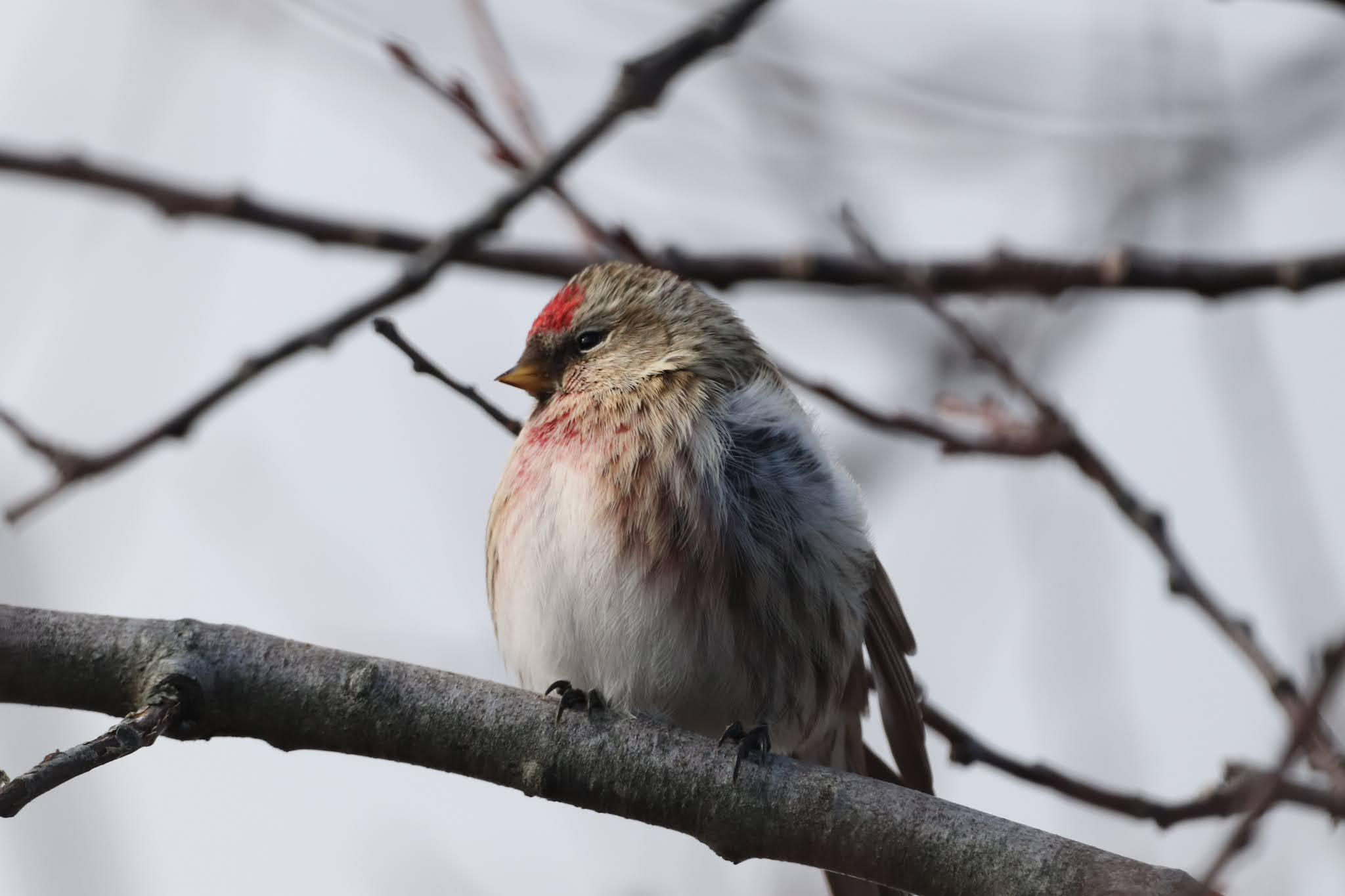
Common Redpoll

   Laurie hadn't done anything fun lately and wanted to get away. We had talked about New Hampshire, but all we could think of fun was dropping me off at a trailhead to go snowshoeing while she went and bought coffee or something. When I threw it out there we spend a night in Newburyport, and go birding Plum Island, I was surprised she said yes. 

   Before I go on to birding, here is my review of the room. We stayed at the Fairfield Inn in Amesbury. It is right off of I-95 and I-495. The cost after taxes and fees was only $77. The room was spotlessly clean. The night guy at the desk, Brian, was awesome as was the morning woman we checked out with, Marianne. I give it five stars. They had grab and go breakfast that consisted of pastry, cereal, yogurt, and bananas.  

   Despite it being spotless I took precautions. I walked in with a giant bottle of sanitizer and rags. I soaked the rags and wiped everything we would touch down from the bathroom, to microwave handles. I also brought my own blankets and pillow. I was careful when I got up in the morning not to let the part of my blanket that touched my bed touch my pillow or other blanket. On to birding...

Pine Grosbeak in a snow flurry

   I left work a few hours early on Thursday so I could enjoy a couple of hours of daylight before checking into the hotel. On our way up I-495 we stopped in Bolton where Pine Grosbeaks had been feeding on crabapple trees all winter. Pine Grosbeaks are one of those winter finches that come down from northern Canada when there is a bad food year. They are one of the rarer finches to make it our way. However, they are not a lifebird for me. DJ and I saw them in Montana in 2010. I didn't know what they were but we got some photos. When we got to Bolton it was snowing. Luckily, the Grosbeaks were around. They let you get pretty close, but the white/grey cloudy sky was awful. I got a couple decent shots of them on the ground in the snow.

   The snow stopped about twenty minutes later and we had a clear run to Salisbury. Before checking into the hotel we went to Salisbury Beach. I was hoping to see Crossbills but we ended up seeing a flock of Common Redpolls that hung around for half an hour. When it got close to dark, we stopped at a sub shop and picked up some supper to bring back to motel. Laurie and I watched Jeopardy where she beat me by one point.

Common Redpoll

Friday- My main goal was to see a White Winged Crossbill which would be a lifer for me. At least one was hanging around Salisbury Beach. Laurie wanted to see a Snowy Owl, up to four had been hanging around Plum Island. Our plan was to go to each place a couple of times. We started at Salisbury just before 8am. It was still cold and the birds hadn't warmed up. So we went to Parker NWR on Plum. There wasn't much at all. We walked a couple trails and birded the road. The best we could do was a Peregrine 3/4 of a mile away. 

   After a couple hours we went back to Salisbury. The sun was out and it warmed some. If we were going to get birds it was late morning. We ran into a mixed flock in the campground. It had Red Crossbills, Common Redpolls, American Tree Sparrows, Chickadees, and Red Breasted Nuthatch. I concentrated on the Red Crossbills. I wanted photo upgrades and hoped to run across the White Winged mixed in. For about forty five minutes it was wild with all the birds. You could stand in one spot and birds would be all around for ten minutes, then they'd move a couple trees down and you'd follow and repeat.

Red Crossbill

   After it ended we went up by the beach where I hoped Crossbills would be in the trees. Sure enough I put my binoculars on a bird right out in the open and it was my White Winged Crossbill. Laurie was close so I called her over. By the time I got her on the bird, about ten seconds, it flew. So I never got a photo. But it was a lifer.

  After an hour of trying to relocate it we went back to Plum for Laurie's Snowy Owl. Despite our best efforts and four hours or more of looking we never found one. Plum was really slow, we only saw about ten species. Our best birds were a Hermit Thrush and Horned Larks. Around dark we left for home.

Saturday

   After a pleasant day and a half of birding, I still had Saturday off. I wasn't sure what the plan was. The "Saturday Group" wasn't getting together. Though four of them did decide to look for Tufted Duck at Trustom. Realizing I'd have full sun most of the day, I wanted a second chance at the Grosbeaks. Happily for me, so did Sue Palmer. 

Pine Grosbeak

   Sue and I met up in Bolton at 9 am. We only had a short wait before the Pine Grosbeaks came in. It was freezing out so we took photos from inside and outside the car. The birds never stopped moving. I took a ton of pictures but most got deleted in the first round of looking at them on the computer. I got a couple good ones, but man, was it tough. 

   After the Pine Grosbeaks got their fill and left us, Sue and I went and staked out a Yellow Throated Warbler. There had been one coming to a feeder in Lancaster for a while. The problem is it was in someone's backyard. The people don't mind visitors. I, on the other hand feel uncomfortable stalking birds at private residences. Luckily, Sue doesn't mind and is much friendlier than me. We pulled up and had the bird within ten minutes. It left and came back again for another ten minutes. After it left we took off. The family wasn't home so we didn't bother anyone. The Yellow Throated Warbler was another lifer for me. This one I got (not great) photos of. I owe Sue for this one, because I wouldn't have gone alone.

   After we left the Warbler, we went back to the Pine Grosbeaks to regroup. Th

Not great, but a life photo of a lifebird
Yellow Throated Warbler

e birds never came back, We tried to figure out where to go next. We went to a WMA near Lake Chauncy. Hoary Redpolls had been reported. But no luck for us. We didn't see any Redpolls nor very many birds at all. 

   All in all I had an amazing two and a half days. I got two lifers (White Winged Crossbills and Yellow Throated Warbler). I got to watch and photograph Common Redpolls and Red Crossbills for an hour sometimes from feet away. I got photo upgrades of Common Redpolls and Red Crossbills and a new upgrade of Snow Buntings and American Tree Sparrows. Pine Grosbeaks were not a lifer, but I'd only seen them once before ten years ago. I got to watch and photograph them on two different days in two different weather conditions. 

   Laurie and I got away, something we hadn't done in ages. The motel as I said above was nice. My quick meals were good and birding was awesome other than Laurie not seeing the Snowy. The only downside was losing at Jeopardy!! A few more photos below

Female Pine Grosbeak

Common Redpoll

Common Redpoll

Snow Bunting

Female Red Crossbill

Juvenile Red Crossbill

Juvenile Red Crossbill

Pine Grosbeak

Pine Grosbeak

One last one of the
Yellow Throated Warbler


Wednesday, January 20, 2021

Life without Autofocus


Not a perfect photo, but a 
Northern Shoveler shot is Aperture Priority
 
A few months back, as I was watching online photography courses learning the functions of my camera I made a few posts about stuff I had learned. The posts had a bunch of photos to support them, but honestly they were not very good. The photos were only there to show how to blur the background or to freeze moving water in a photo. However, my photography passion is wildlife, birds being a big percentage of the wildlife pie.

   Once I learned my camera's functions I started to use them more and more and autofocus less. Now, I have to be honest with you I have made a lot of mistakes. For starters, the one I have done the most is change settings for one situation and forget to change them back when I was done. Countless times I've used a setting for shadows or low light and forget about it and when I have the opportunity to get a good shot in bright sunlight I blow out the highlights. Fortunately, I am getting much better at remembering this.

   Another mistake I have made is forgetting everything I've learned when I am rushing to take a photo of a bird that is moving away. I've "panicked" and set my aperture in the wrong direction a couple of times. I've set the brightness to the wrong side of zero occasionally. Again, these are things I am doing far more infrequently as I get used to life without autofocus.

   After one of my posts, my friend Bill Thompson whom is a great/ethical/patient photographer told me he usually shoots in Aperture Priority with the shutter opened right up. This means there is a lot of light getting into the lens. What you are focused on will be in focus while the background is blurry. And truthfully, this is how I shoot "most" of the time. However, I have noticed where there are exemptions. Last week I saw some Snow Buntings are Scarborough Beach on the rocks. They really blended in with the rocks and the rocks were colorful. I wanted to show them in the photos as well. So I went in the opposite direction and moved my F-stop as high as I could. This way, when I took the photo everything was in focus including the colorful rocks.

   One thing I've learned, there is more than one way to get the photo you want. Four different photographers standing side by side could get the same photo or close to it in four different modes of their cameras. There isn't "one perfect setting". I have not gone into full manual mode where I set the Aperture, Shutter Speed, and ISO. I don't feel comfortable with ISO and I don't think I would want to play with the settings that much.

   I stay in Aperture Priority and Shutter Speed Priority all the time now. As I said above I usually leave my Aperture wide open. But I am using shutter speed priority more and more for moving birds. Swimming ducks on the water have been driving me crazy. They look like they are barely moving but so many photos come out blurry. So now, if I have good light, I'll shoot a duck at a crazy fast speed like 1/1000 of a second. That way it is sure to be in focus. However I need a lot of light for this. With the shutter only open .001 of a second not a lot of light can reach the inside of the camera. So I have to pick my moments. 

   I am also adjusting my modes when I have a lot of time. For instance when I was watching Iceland Gulls last week, I took pictures in different modes. Not only different modes but I set the "stop" on my brightness at different levels. The first photos I took the brightness was too high and the gulls looked like blown out ghosts. After I got that right I took photos in Aperture and Shutter speed priority until my little heart was content.

   Now, here is where truth and statistics collide, I have to tell you, not every photo is a winner. As a matter of fact my batting average for getting a "good photo" is way down. However, there seems to be some rewards too. Here is the stats as best I can tell. Lets say I'm at a good bird that I can photograph for a while and I take fifty photos. If I were in autofocus, maybe 10-15 of those photos would be junk and deleted instantly. Bird moves, the bird is blurry, or the camera focuses too late, etc. Of the thirty five left almost all are clear. The subject is in focus. Maybe four or five of the fifty, I could hopefully rate an A- and use on my blog or save. Hopefully over the course of a year I will get 4-5 wall hangers where everything is perfect.

   Now that I shoot in different modes the make up of those fifty photos is much different. Right off the bat I will easily delete thirty five. The bird will be out of focus. The camera will have focused on a twig in front of the bird, etc. This leaves me fifteen good photos compared to thirty five in autofocus. But here is the thing, it seems like at every photo shoot I am getting one or two "perfect" photos. Where as I was hoping to get four or five a year, I may get that in a day. It just seems that despite 35 garbage photos, that one or two great photo makes it all worth it. 

It is fun to come home and put my memory card in the computer while having supper. Normally one finger is on the "delete" key. And all of the sudden a photo stops me and I go "whoa!" That is happening on a daily bases. So despite my percentage of good photos going way down while experimenting with settings, my blow you away photo percentage is going up. I'd much rather have one great photo than thirty decent ones. This certainly saves me storage space on my external hard drive.

   So there you have it, the good and the bad. Learning to use my settings has had some ups and downs. I am nowhere near the end of my learning curve. I'm sure I'll still forget everything as I'm rushing for a photo. When it gets nice out, I'm sure my fish photos will be in Autofocus. I am not going to make a suffocating fish wait for me to play with my Aperture. Autofocus and release. However for birding, I think Aperture and Shutter Priority are where I'm going to stay. For one, adjusting the settings and getting it right is fun in itself. When that great photo stops me in my tracks it makes all those deleted photos totally worth it. 

Friday, January 15, 2021

The Last Two Days were Awesome!


Orange Crowed Warbler

   It has only been a few days and my decision not to worry about a list is already paying off. First off, I have gotten a surprising amount of positive feedback from my birding buddies about not listing. I had the last two days off from work and birded pretty much from dawn till dark both days. Both days I had a great time. 

    I started yesterday at a place my friend Jess found an Orange Crowned Warbler last Saturday. I didn't see it early, but I knew I was going to go back multiple times during the day. While I was there, I had three Iceland Gulls walking and feeding around me. Iceland Gulls are a rare species that will show up in the winter. However, these ones were easy marks and photographing them felt like picking low hanging fruit. I also got some photos of Sanderlings, they are a common little shorebird, but dang, they won't stand still!

   Then I dipped on a few birds. I went to Quonny to look for the King Eider, no luck. Then I went to Perryville and did not see a Winter Wren. Nor did I see everyone's favorite Lesser Black Backed Gull, Lester. No worries, I'm not keeping a list!

   About 10 am, I went back to where the Orange Crowned (OC) was. I waited about twenty minutes and all of the sudden it started catching flies. I watched it feed for around fifteen minutes before it decided to hide in the brush again. Some people have gotten amazing photos of this bird. It didn't come quite as close to me, but I had some decent light and could crop my photos a lot. Very much a photo upgrade from what I had.

   After I left the OC, my friend Sue met me and we walked the South Kingstown Land Trust. There wasn't anything there. From there I went for some more low hanging fruit and watched the Northern Shoveler almost until dark. I have never seen a Shoveler so close, and they are rare for this area to begin with. I will happily take advantage of watching this duck until it decides to head for bluer water.

   Today's plan was to take the Block Island Ferry with some of my friends. The hope is to see species you can not see from land. Species in the puffin family are known as Alcids. We have some of those species that winter in Block Island Sound. There were not a lot of birds today. However we saw a Common Murre on the way to the island and another on the way back. We had about a dozen Razorbills. Ducks and Gulls were pretty scarce. Still I was more than happy to see and especially photograph the Murre. 


Black Headed Gull

   After we got back, Sue, Tim and I went to Scarborough Beach to see the Black Headed Gull. We found it on the rocks at the Sheepspen. It was standing still, and being a gull, didn't care about our presence at all. We got lucky, besides the Black Headed Gull we found some more cool species. There was an Iceland Gull mixed with the gulls. Since I was basically petting Iceland Gulls yesterday, I only took a couple of photos. We also had a flock of Snow Buntings fly in. They were feeding and walking on the baseball sized rocks near the beach. We watched them for a few minutes until they were spooked by a dog. Finally, on our way out, Sue walked up a path through the brush and found an out of season Palm Warbler. 

   In my last post, I wrote down all the pros to not keeping a list this year. In my first weekend since making this monumental decision (that may be a tad dramatic, but only slightly) all of those things happened. I got to spend as much time as I wanted watching and photographing cool birds like the Shoveler and the two gulls. I waited for the Orange Crowned Warbler to show itself without worrying about rushing off because of time constraints. I got to spend time on the ferry with some of my friends. I got some really good photos of many different species because I had the time to enjoy them.

    Most importantly, I wasn't stressed. I was happy to see the Common Murre, not disappointed that I didn't see Kittiwake. Dipping on the Winter Wren gives me an excuse to walk the road at Perryville again.

Snow Bunting

Snow Bunting

Black Headed Gull

Really cropped Common Murre from
the Block Island Ferry

Great Cormorant

Northern Shoveler

Northern Shoveler

Yellow Bellied Sapsucker

Horned Grebe

Sanderling

Iceland Gull

Iceland Gull

Iceland Gull